
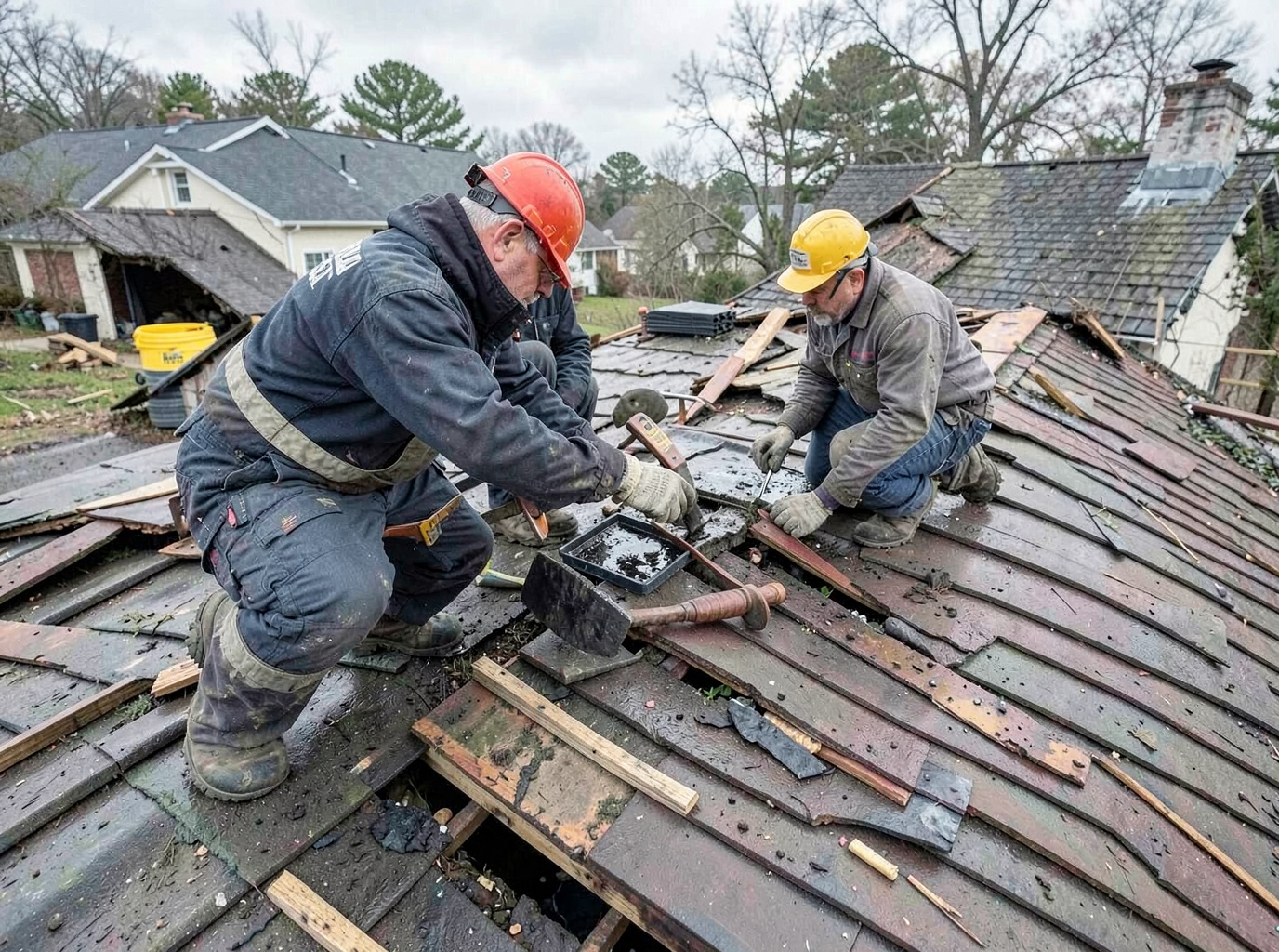
Roanoke sits in an independent city with four distinct seasons that bring sudden wind gusts, hail and heavy downpours. Homes in Grandin Village and Raleigh Court often date to the 1920s through 1960s with layered asphalt shingles that hide previous storm repairs. After a storm, crews check for lifted tabs, granule loss and hidden deck rot along valleys and around chimneys where water pools fastest.
Wind-driven rain in the Roanoke Valley pushes water under flashing at skylights and ridge vents faster than most homeowners expect. Tree cover in Wasena and near the Virginia Museum of Transportation adds limb-fall risk that punctures older felt underlayment. Repairs here focus on matching existing shingle weight and color while replacing only the damaged courses to keep the roof watertight through the next season.
Downtown and Salem-adjacent properties sit on steeper lots where runoff concentrates at eaves. Storm repairs routinely include new step flashing and drip edge because original metal has corroded after decades of freeze-thaw cycles. Skipping these details leads to interior leaks months later when temperatures drop again.
Insurance adjusters in the area expect documentation of hail spatter patterns and wind uplift at the ridge. Local crews photograph every section before work begins and note any pre-existing wear so claims stay accurate and homeowners avoid out-of-pocket surprises.
Technician insight
In Roanoke the thing that catches most people out with storm damage roof repair is hidden rot under the second layer of shingles on 1940s–1960s homes in Grandin Village and Wasena. Four distinct seasons drive repeated freeze-thaw cycles that open seams long after the storm passes, so we always pull a few extra courses to check the deck.
Wind damage on a Wasena bungalow
High winds tore ridge shingles loose on a 1952 bungalow near the Roanoke Star overlook. Inspection showed lifted tabs along two valleys and water already tracking into the attic insulation. We replaced the damaged ridge, installed new step flashing and sealed the valleys. The homeowner avoided a full re-roof and the interior stayed dry through the next heavy rain.
Storm Damage Roof Repair Services We Offer
✓Hail Damage Shingle Replacement
Replace individual hail-bruised shingles on roofs in Grandin Village and Raleigh Court where granule loss exposes felt to UV and rain.
✓Wind Uplift Repair
Re-secure lifted shingles and replace missing ridge cap after high winds common in the Roanoke Valley's open terrain.
✓Tree Limb Penetration Repair
Patch decking and install new underlayment and shingles where limbs from Wasena trees have punctured older roofs.
✓Emergency Tarping
Install temporary reinforced tarps over active leaks in Downtown Roanoke to protect interiors until permanent repairs are scheduled.
✓Flashing and Valley Restoration
Replace corroded step flashing and valley metal that fails after repeated heavy rain events in the four-season climate.
✓Gutter and Downspout Storm Repair
Realign and reseal gutters pulled loose by ice or wind so water continues to shed away from foundations in Salem and Blacksburg homes.
Storm Damage Roof Repair Cost in Roanoke, VA
| Service | Typical Range | What Affects It |
|---|---|---|
| Storm damage inspection | $150–$300 | Includes photos and written scope; credited toward repair if work proceeds. |
| Hail or wind shingle repair | $800–$2,800 | Varies by number of squares and whether decking needs replacement. |
| Emergency tarping | $350–$650 | Size of damaged area and roof pitch determine labor time. |
| Flashing and valley restoration | $600–$1,400 | Metal type and linear feet affect material cost. |
Ranges are typical for Roanoke, VA and confirmed with an exact written quote before any work starts.
How it works
- 1
On-Site Storm Assessment
Walk the roof from multiple angles noting hail hits, wind damage and water intrusion points specific to the home's age and exposure.
- 2
Detailed Documentation
Photograph every affected section and measure square footage so insurance claims reflect actual storm impact rather than prior wear.
- 3
Targeted Material Removal
Remove only damaged courses while preserving sound shingles to limit waste and keep the repair line straight.
- 4
Repair and Weatherproofing
Install new underlayment, flashing and matching shingles then seal all penetrations before final walkthrough.
- 5
Final Walk and Handover
Review completed work with the homeowner and supply photos for their records and any remaining insurance steps.
Pricing
Most storm repairs start with an inspection; final cost depends on squares affected, deck condition and whether insurance covers the work.